
The short answer: AI is making real estate professionals faster and better informed, but it is also making human judgment, relationships, and trust more valuable.
Artificial intelligence can help organize information, support marketing, analyze data, streamline administrative work, and increasingly influence how buyers and sellers find real estate expertise online. What it cannot replace are the parts of the client experience that depend on context, empathy, discretion, negotiation, and judgment.
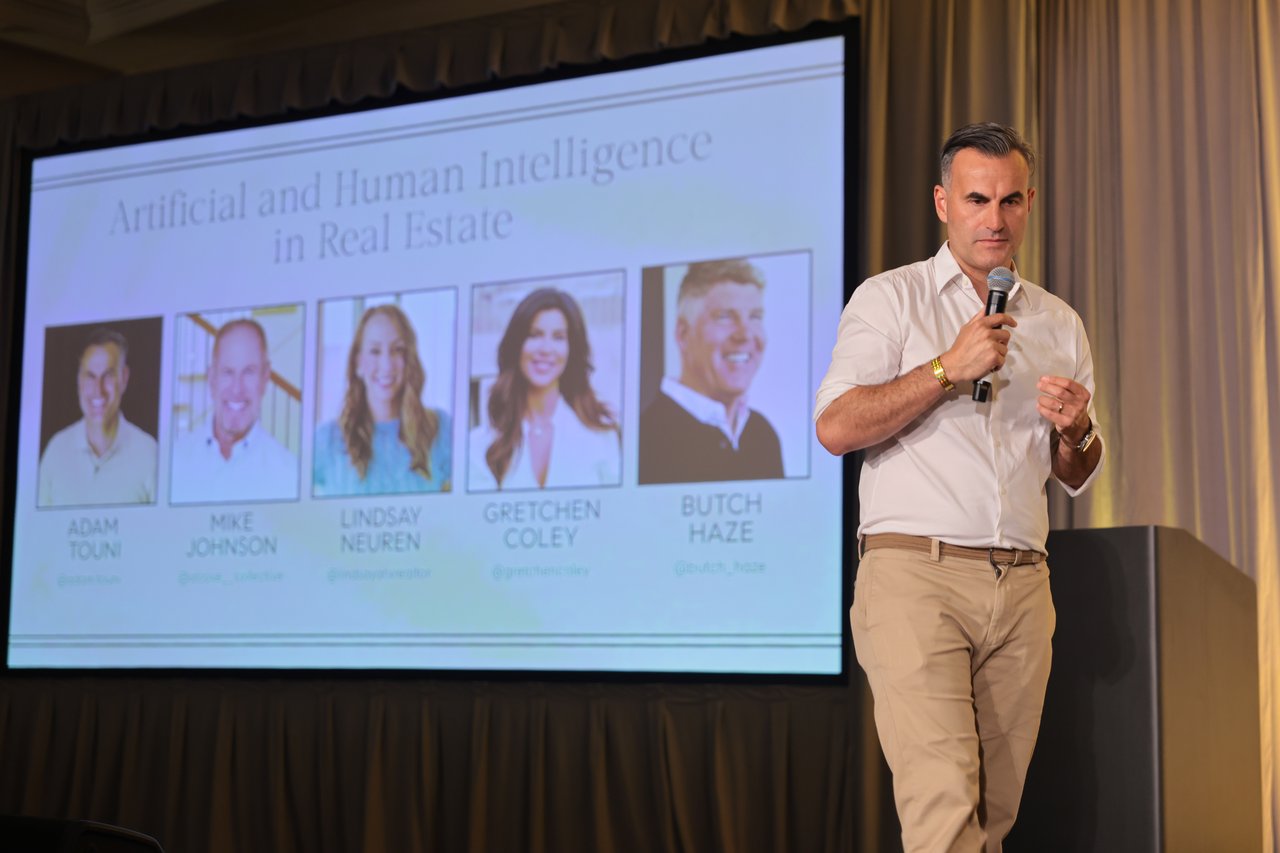
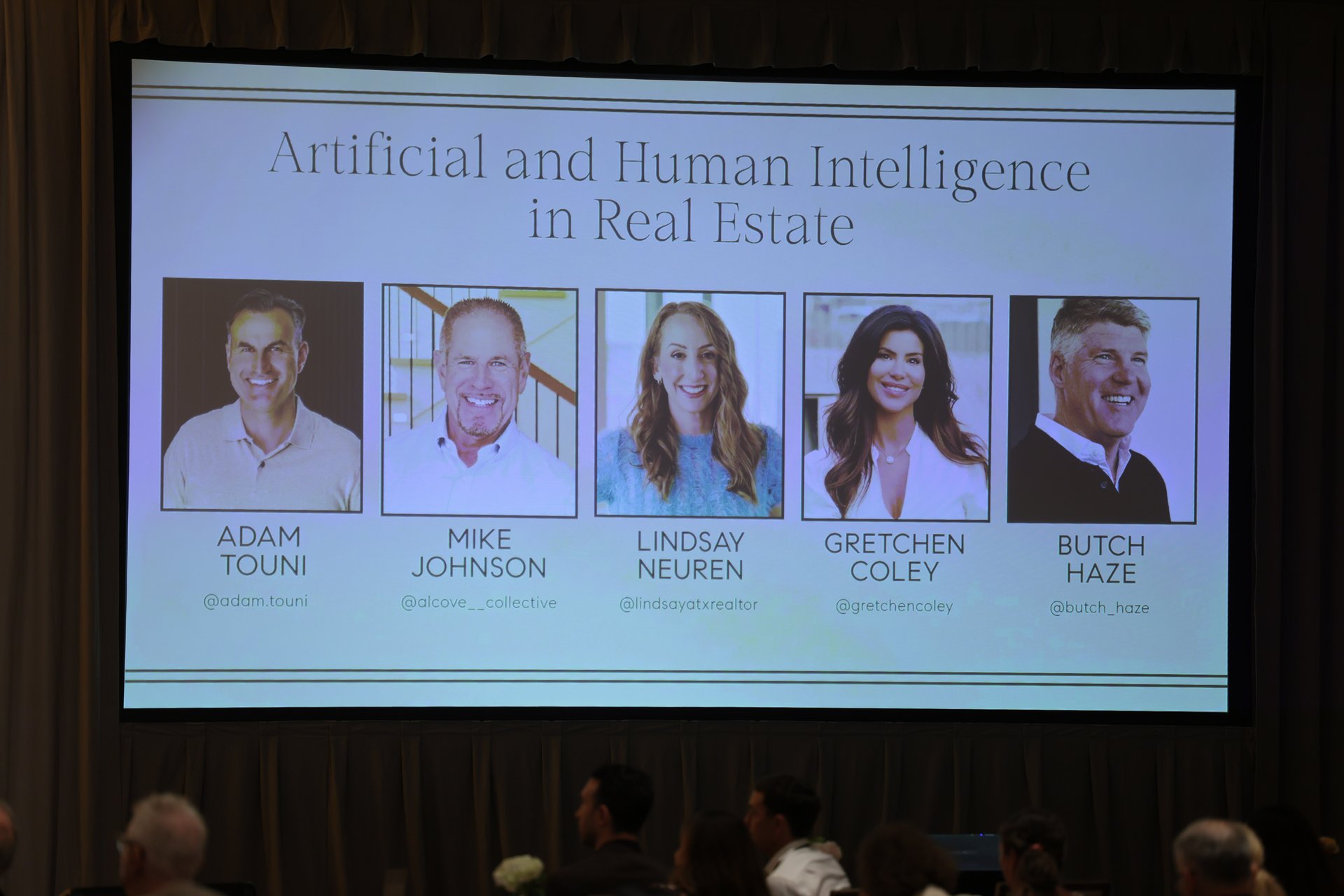
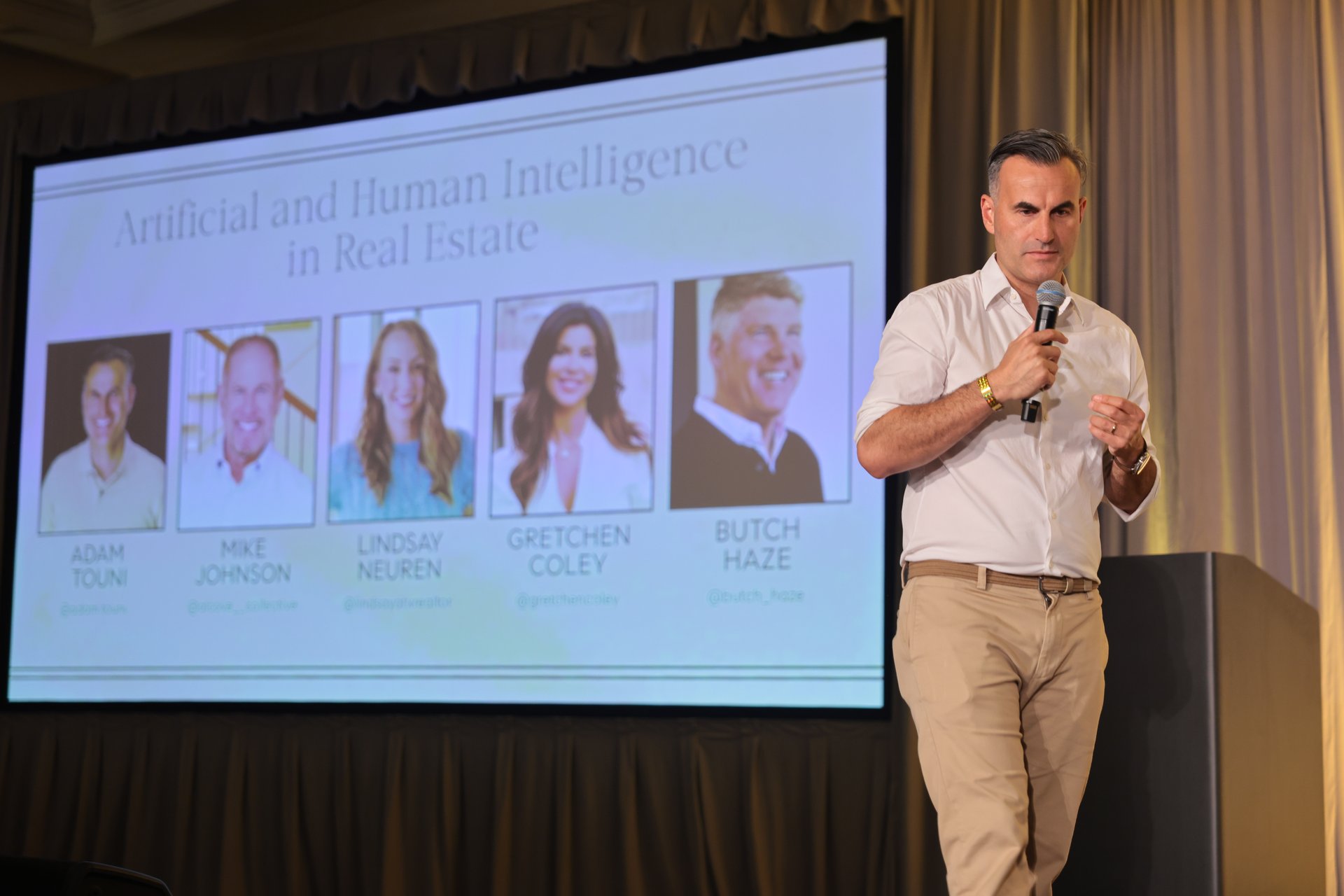
That was the central conversation at the 2026 Compass Southern California Luxury Summit, where The Resolve Group cofounder Adam Touni moderated a panel titled “Artificial & Human Intelligence in Real Estate.”

Held August 10–12 at the Waldorf Astoria Monarch Beach in Dana Point, the Summit brought together real estate professionals for conversations around luxury branding, market strategy, technology, artificial intelligence, and the future of the industry.
Adam was joined by Mike Johnson of ALCOVE Collective in Laguna Beach, Lindsay Neuren of Speed & Neuren Group in Austin, Gretchen Coley of The Coley Group in Raleigh, and Butch Haze of the Butch Haze Group in San Francisco and Marin.
Together, the panel explored a question that is becoming increasingly relevant to our industry:
As artificial intelligence becomes capable of doing more, where does human intelligence matter most?
The answer is not choosing between artificial and human intelligence. It is understanding where technology can create more time and opportunity for the high-touch, highly personal work clients value most.
Here is the longer version.

How is AI being used in luxury real estate?
Artificial intelligence is already being used throughout real estate to help professionals work more efficiently.
Depending on the application, AI can assist with:
- Drafting and refining communications
- Organizing and summarizing information
- Identifying important dates and tasks
- Supporting property marketing
- Analyzing information and data
- Reducing repetitive administrative work
- Helping consumers research markets, properties, and real estate professionals
Those efficiencies matter, but efficiency itself is not the end goal.
The more useful question is: What does an advisor do with the time and information AI gives back?
For us, the answer is more time for conversations, strategy, relationships, and the decisions that actually require experience and judgment.

Will AI replace real estate agents?
We do not believe the most valuable role of a real estate advisor is simply providing information.
Property data, comparable sales, neighborhood information, market statistics, and increasingly sophisticated analysis are becoming easier for consumers to access.
But access to information is not the same as knowing what to do with it.
This distinction becomes particularly important in luxury markets such as Atherton, Palo Alto, Menlo Park, Los Altos, Los Altos Hills, Portola Valley, and Woodside, where properties may trade infrequently, opportunities can emerge privately, and the circumstances surrounding a transaction can be as important as the numbers themselves.
AI can process information extraordinarily quickly. Clients still need someone to interpret that information, understand its context, anticipate risk, negotiate strategically, and help them make consequential decisions with confidence.
How is AI changing the way clients find real estate agents?
One of the biggest changes may happen before a prospective client ever speaks with an agent.
Search behavior is evolving.
Consumers increasingly use AI-powered search and conversational platforms to research neighborhoods, understand the buying and selling process, compare markets, and identify professionals with relevant expertise.
That means being discoverable online is evolving beyond traditional search engine optimization.
AI systems may draw from information available across websites, professional profiles, reviews, recognition, published expertise, and other online sources to understand who a person is and what they are known for.
For real estate professionals, the implication is straightforward: your digital presence should accurately and consistently reflect the expertise you have built in the real world.
Being found, however, is only the beginning. The client experience still determines what happens next.

Should real estate agents use AI to communicate with clients?
AI can be useful in preparing communication. The final judgment should remain with the advisor.
Panelist Gretchen Coley shared a practical framework she calls “Human in the Loop.” The principle is simple:
AI drafts. The human makes the final decision.
Technology can help organize thoughts, summarize information, or create a first draft, but the advisor remains responsible for what the client ultimately receives.
That distinction matters.
A client may be making a multimillion-dollar decision, navigating an inspection issue, evaluating competing offers, or determining whether to move forward at all. Those moments require context that cannot simply be delegated to an automated system.
The goal should not be to automate every interaction. It should be to automate appropriate work so advisors have more attention available for their clients.
Why could AI make human expertise more valuable in luxury real estate?
As information becomes easier to access, interpretation becomes more important.
A buyer can retrieve comparable sales. That does not necessarily tell them why one property traded differently from another.
A seller can see market statistics. That does not automatically determine the right positioning strategy for a particular home.
AI can summarize information. It cannot independently recreate the complete context surrounding every private conversation, property, relationship, or transaction.
Luxury real estate often involves nuances that extend beyond publicly available data. That makes experience, judgment, relationships, discretion, and local knowledge especially important.
The technology may change. The need to make a good decision does not.

How can AI improve the luxury real estate client experience?
One of the most memorable ideas from the Summit came from panelist Butch Haze, who challenged real estate professionals to think more like exceptional hospitality brands.
His example was Four Seasons.
Instead of asking only how technology can make a business faster, consider how an exceptional hospitality brand might hand a new homeowner their keys or create an experience around an open house.
That distinction gets to the heart of how we think about AI in luxury real estate:
Efficiency matters behind the scenes. Experience matters in front of the client.
Technology can create consistency, eliminate friction, and give an advisor more time and information. That should create room for a better human experience, not a less personal one.
As the panel presentation summarized it:
Service is a philosophy, not a script.
What parts of real estate should remain human?
Some parts of real estate depend fundamentally on understanding people.
Negotiation is human.
Reading the dynamics between two parties is human.
Understanding why a seller may hesitate over an otherwise strong offer is human.
Recognizing when a buyer needs additional information and when they need the confidence to make a decision is human.
Trust is human.
These are precisely the areas that may become more valuable as the administrative and informational layers of real estate become increasingly automated.
That is not an argument against artificial intelligence. It is an argument for using it intentionally.

How does The Resolve Group use technology and AI?
Being based in the heart of Silicon Valley gives us a particularly interesting vantage point on this conversation.
Innovation is part of the culture of the communities we serve. Our clients include people building, investing in, and leading technologies that are reshaping industries around the world.
We are interested in using technology where it can make us better advisors: researching more effectively, communicating more clearly, analyzing information faster, improving marketing, and operating more efficiently.
At the same time, we believe the judgment, discretion, creativity, relationships, and personal attention our clients hire us to provide should remain firmly human.
The principle we took away from the Southern California Luxury Summit is simple:
Let technology handle more of what repeats so people can give more attention to what does not.
Artificial intelligence will undoubtedly play a larger role in real estate.
The best real estate experiences should still feel unmistakably human.
Thinking about buying or selling in Atherton, Palo Alto, Menlo Park, Los Altos, Los Altos Hills, Portola Valley, or Woodside? [LINK: Talk to The Resolve Group] about your next move.

Frequently asked questions
How is AI used in real estate?
AI can help real estate professionals organize and analyze information, draft communications, support marketing, manage repetitive administrative work, and improve research. It is also changing how consumers research properties, neighborhoods, markets, and real estate professionals online.
Will AI replace luxury real estate agents?
AI can automate or accelerate certain tasks, but luxury real estate also depends heavily on judgment, relationships, negotiation, discretion, local knowledge, and understanding the context surrounding a transaction. Technology can support those responsibilities without replacing the human advisor.
How is AI changing real estate search?
Consumers can increasingly use AI-powered search and conversational tools to ask complex questions about neighborhoods, markets, the buying and selling process, and real estate professionals. This makes accurate and consistent digital information increasingly important for agents and real estate teams.
What is “Human in the Loop” AI?
Human in the Loop describes an approach in which artificial intelligence assists with a task while a person retains responsibility for reviewing the output and making the final decision. In the framework discussed at the Summit, the principle was simple: AI can draft, but the human makes the final decision.
Why is human judgment still important in luxury real estate?
Luxury transactions often involve circumstances that cannot be understood through data alone, including property-specific nuances, private opportunities, negotiation dynamics, client priorities, timing, and risk. An experienced advisor helps interpret the available information within that broader context.
What was the 2026 Compass Southern California Luxury Summit?
The 2026 Compass Southern California Luxury Summit was held August 10–12 at the Waldorf Astoria Monarch Beach in Dana Point. The event brought together real estate professionals for discussions around luxury real estate, branding, market strategy, technology, artificial intelligence, and the future of the industry. Adam Touni, cofounder of The Resolve Group, moderated the “Artificial & Human Intelligence in Real Estate” panel.
About The Resolve Group
The Resolve Group is a Compass real estate team specializing in Stanford Circle, including Atherton, Palo Alto, Menlo Park, Los Altos, Los Altos Hills, Portola Valley, and Woodside. Cofounded by Adam Touni and Katharine Carroll, the team has closed more than $700 million in residential sales since 2019 and advises buyers and sellers through complex transactions with local expertise, strategic execution, and highly personalized representation.