
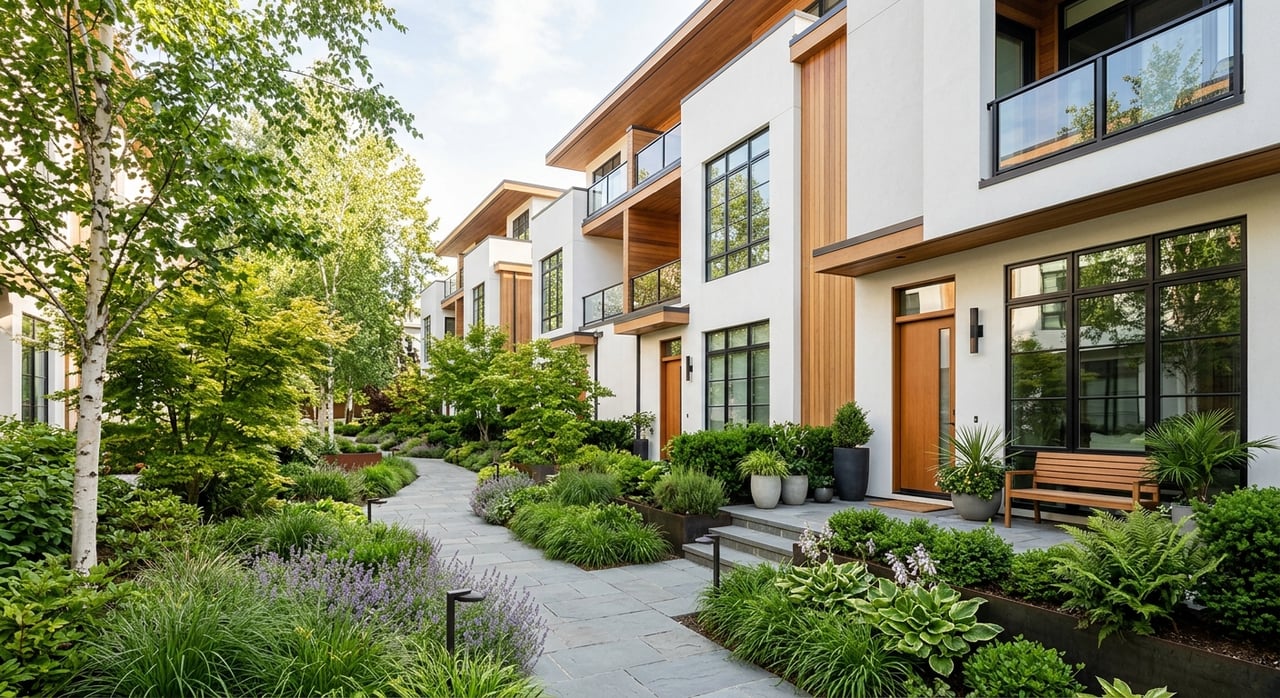
If you want a home in Silicon Valley without taking on every weekend maintenance task, Mountain View deserves a close look. For many buyers, condos and townhomes offer a practical path to ownership in a city known for transit access, walkability, and strong job centers. If you are weighing convenience, commute options, and long-term fit, this guide will help you sort through what matters most. Let’s dive in.
Why Mountain View Fits Modern Buyers
Mountain View stands out because it supports a more connected daily routine. The city combines a walkable downtown, a major transit center, bike and trail access, and proximity to major employment areas like downtown, North Bayshore, and East Whisman.
That mix makes condos and townhomes especially appealing if you care more about location efficiency than yard space. Instead of maximizing lot size, you may be able to prioritize easier upkeep, shorter trips, and better access to restaurants, transit, and work hubs.
In simple terms, many buyers choose this housing type for lifestyle reasons. You may give up some privacy and exterior control compared with a detached home, but you often gain a lower-maintenance setup and a more convenient location.
Condos vs. Townhomes: What to Know
Before you focus on finishes or floor plans, it helps to understand how these homes function. Condos and townhomes can look similar from the street, but ownership structure, HOA responsibilities, and financing can differ in meaningful ways.
Condo ownership usually means you own the interior of the unit while sharing ownership of the building exterior and common areas. That often comes with monthly HOA dues that may cover items like exterior maintenance, water, sewer, trash, insurance, reserve contributions, and shared amenities.
Townhome-style properties can involve a different legal structure, and the design alone does not tell you how the property is governed or financed. A townhome may be part of a condo project, a planned unit development, or another common-interest development, so it is important to verify the actual project structure early.
The Real Cost of Ownership
One of the biggest mistakes buyers make is looking only at the mortgage payment. With condos and townhomes, the true monthly cost usually includes HOA dues, and those dues can cover very different things from one community to another.
That is why you should ask exactly what the HOA fee includes. Parking, utilities, common-area upkeep, recreation features, insurance, and reserve funding can all change the value equation.
You should also keep special assessments on your radar. If a building needs a major repair or capital improvement, owners may be asked to contribute additional funds beyond regular monthly dues.
Why HOA Review Matters So Much
In Mountain View, HOA review is not a side task. It is a central part of evaluating whether a condo or townhome is a smart fit for your budget and long-term plans.
California law requires HOA boards to conduct a reserve study at least every three years and review it annually. The annual budget report must include a reserve summary, a reserve funding plan, and statements about deferred repairs or possible special assessments.
That means buyers should expect detailed document review before closing. Sellers must also provide governing documents to prospective purchasers before transfer, which gives you a chance to understand the rules, financial health, and risk profile of the community.
A strong HOA does more than maintain landscaping or common hallways. It can also support financing options, help preserve the building, and reduce unpleasant surprises after you move in.
Mountain View Areas Buyers Often Consider
Not all condo and townhome options in Mountain View deliver the same experience. Your best fit depends on whether you care most about walkability, commute efficiency, newer housing stock, or long-term environmental context.
Downtown and Castro Street
Downtown Mountain View centers on Castro Street between Evelyn Avenue and El Camino Real. It is a mixed-use district with restaurants, shops, civic spaces, performing arts, and easy access to transit.
For buyers who want a more urban, car-light lifestyle, downtown has a lot going for it. The city established pedestrian-mall blocks on Castro Street in 2022, which continues to shape the area as a more walkable and active center.
The Downtown Transit Center is one of the biggest advantages here. On a typical weekday, it serves more than 12,000 boardings and alightings and connects riders to Caltrain, VTA light rail, bus service, and shuttles.
Downtown also supports bike-based living. Mountain View reports more than 10 miles of multi-use trails, accessible sidewalks, expanding bike-lane coverage, and rent-free short-term bicycle storage at the Downtown Transit Center.
San Antonio and El Camino Real
The San Antonio area functions as a mixed-use hub with housing, retail, services, restaurants, and pedestrian access to Caltrain and VTA stations. Redevelopment in and around San Antonio Center has added more mixed-use elements, making it a practical option if you want errands, dining, and commuting options close together.
El Camino Real is another important corridor for buyers looking at condos and townhomes. It connects shops, businesses, multi-family housing, neighborhood streets, trails, and freeway access.
This area can be appealing if convenience is high on your list, but it often feels busier than downtown side streets. The city and Caltrans are also implementing streetscape and safety upgrades here, including protected bikeways and new crossings.
East Whisman
East Whisman is planned as a highly sustainable, transit-oriented employment center with residential uses, commercial activity, open space, and multimodal access. If you are relocating and want newer housing patterns with strong commute efficiency, this area often makes practical sense.
For some buyers, East Whisman may feel more functional than historic. That can be a positive if your top priorities are newer product, access to employer clusters, and a well-connected daily routine.
North Bayshore
North Bayshore is planned for sustainable and innovative commercial and residential development. It is attractive for buyers who want access to a major employment area and broader city connections through shuttles and transit.
At the same time, this is a Bay-adjacent area, and that matters for long-term planning. The city notes that Shoreline-area communities are vulnerable to sea-level rise and flooding, so buyers considering this submarket should review project location and resilience context carefully.
Transit and Mobility Can Matter More Than Amenities
In many condo markets, buyers focus first on pools, clubhouses, or fitness rooms. In Mountain View, the more valuable questions are often about everyday mobility.
You should pay attention to proximity to Caltrain, the Downtown Transit Center, MVgo shuttle connections, trails, safe walking routes, and bike access. These features can shape your daily life in a bigger way than a long list of building extras.
The MVgo shuttle network helps connect the Transit Center with North Bayshore, East Whisman, San Antonio, and downtown. For buyers hoping to reduce reliance on a private car, that connectivity can be a real advantage.
Financing Checks You Should Make Early
A condo or townhome that looks perfect online can become more complicated once financing enters the picture. Lenders do not just review your income and credit. They also look at the project itself.
Project review can include the physical condition of the property, financial stability, insurance coverage, structural debt, litigation, and inspections. If the project has weak reserves, deferred maintenance, or insurance gaps, financing may become more limited or more expensive.
That is why it makes sense to ask early whether a project is warrantable and whether it is likely to work with your intended loan type. If you are considering FHA financing, project approval or single-unit approval standards may also come into play.
Smart Questions Before You Make an Offer
When you tour condos and townhomes in Mountain View, it helps to go beyond layout and staging. The right questions can uncover whether a home fits your budget, financing goals, and future plans.
Here are some of the most useful ones to ask:
- What exactly is included in the HOA fee?
- What expenses are not covered by the HOA dues?
- Is parking included, deeded, or assigned?
- Are there any pending special assessments or major deferred repairs?
- How well funded are the HOA reserves?
- Is the project likely to work with conventional financing or FHA financing?
- What type of common-interest development is this property part of?
- What are the rules around future rentals or owner flexibility?
- How much does transit access matter if you want to reduce car use?
How to Think About Long-Term Fit
The best Mountain View condo or townhome for you is not always the one with the newest kitchen or the flashiest amenities. It is the one that matches how you want to live now and what you may need later.
If you value simpler upkeep, commute efficiency, and better access to transit and employers, a condo or townhome may be a strong long-term fit. If privacy, yard space, and exterior control matter more, a detached home may still be the better match.
It also helps to remember that Mountain View is not one uniform submarket. Downtown, San Antonio, El Camino Real, East Whisman, and North Bayshore each offer a different mix of walkability, transit access, building age, and long-term considerations.
That is why careful review matters. Current HOA documents, project condition, financing flexibility, and area context all play a major role in how confident you can feel about the purchase.
If you are comparing condos and townhomes in Mountain View, a calm, thorough strategy can make the process much clearer. The team at The ReSolve Group helps buyers evaluate disclosures, financing considerations, property-specific risks, and neighborhood fit so you can make a well-informed move with more confidence.
FAQs
What makes Mountain View condos and townhomes attractive to buyers?
- Mountain View appeals to many buyers because it offers walkability, strong transit connections, bike and trail access, and proximity to major employment areas, which can make lower-maintenance ownership especially practical.
What should you review in a Mountain View HOA before buying?
- You should review what the HOA fee covers, reserve funding, possible special assessments, deferred repairs, governing rules, and the overall financial health of the association.
What Mountain View areas are popular for condo and townhome buyers?
- Buyers often focus on downtown and Castro Street, San Antonio, El Camino Real, East Whisman, and North Bayshore, depending on their priorities around walkability, transit, commute efficiency, and long-term context.
What financing issues matter for Mountain View condo purchases?
- Lenders may evaluate the project’s condition, reserves, insurance, litigation, and financial stability, so a project’s overall health can affect loan options and costs.
What should buyers know about North Bayshore in Mountain View?
- North Bayshore offers strong access to employment and city connections, but because it is Bay-adjacent, long-term buyers should also pay attention to flood and sea-level-rise context.
What is the difference between a condo and a townhome in Mountain View?
- The design alone does not tell you the ownership or financing structure, so you should verify whether the property is part of a condo project, a planned unit development, or another common-interest development.