
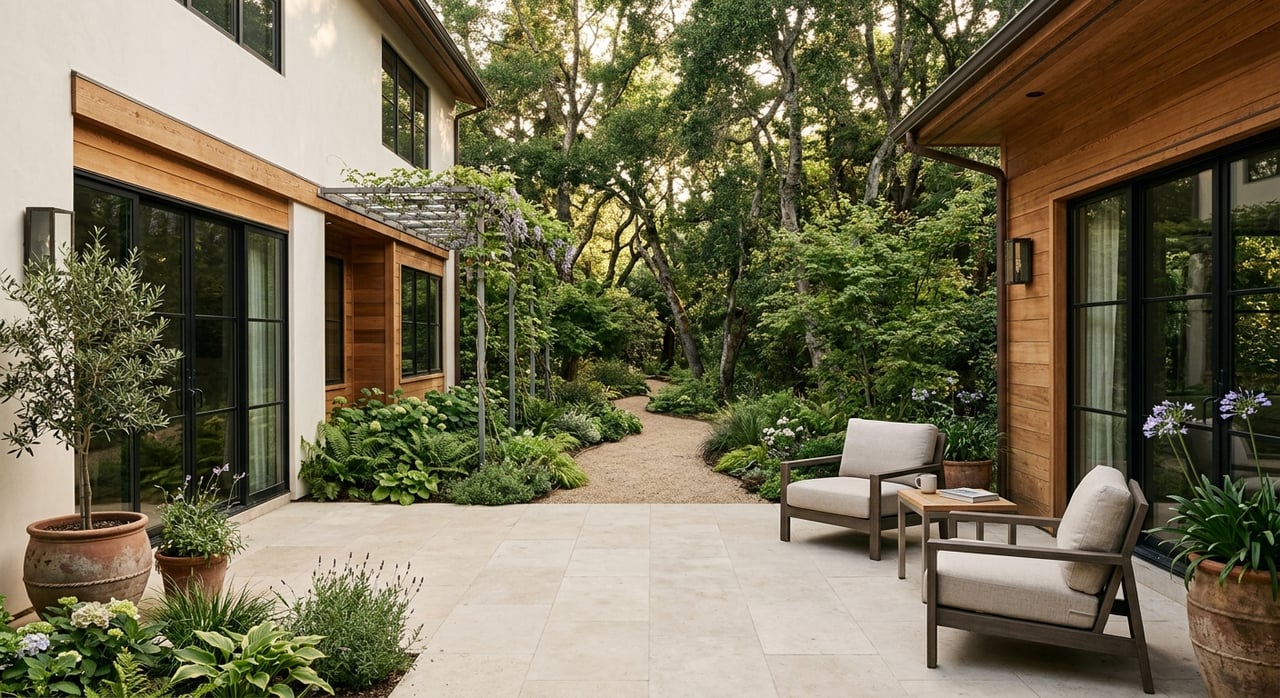
If you are trying to understand Portola Valley, start with this: where you live in town can shape your day-to-day experience as much as the home itself. Some areas put you closer to civic amenities and quick errands, while others lean into hills, trails, and a more tucked-away setting. If you want a clearer way to compare Portola Valley’s neighborhoods and open space, this guide will help you sort through the tradeoffs and decide what fits your lifestyle best. Let’s dive in.
Why Portola Valley Feels Distinct
Portola Valley is a small town of roughly 4,500 residents spread across 9.1 square miles. It sits west of Stanford in a green valley framed by wooded hills, and the town is known for its open space, scenic roads, trail network, and rural ambiance.
That setting shapes daily life in noticeable ways. The town also describes itself as a dark-sky community with no streetlights, which adds to the quiet, low-density character many buyers notice right away.
Three Ways to Compare Neighborhoods
A simple way to evaluate Portola Valley is to look at three factors: central convenience, hillside privacy, and trail adjacency. Most residential pockets in town fall somewhere along that spectrum.
If you want easier access to community facilities and local errands, central areas near Town Center and Portola Road may stand out. If you prefer larger lots, a more rugged setting, or stronger trail access, neighborhoods in the hills or near major open-space areas may feel like a better match.
Town Center and Portola Road Corridor
Best for convenience and community access
The Town Center area is the most amenity-rich part of Portola Valley. Opened in 2008, it includes the library, Community Hall, Town Hall, playing fields, and the Historic Schoolhouse used for public meetings.
This part of town often feels more like a small civic campus than a traditional downtown. The Town Center also supports classes, picnic areas, sports courts, and meeting spaces, while town-sponsored activities throughout the year can include hikes, recitals, art exhibits, speakers’ evenings, and theater performances.
What daily life can look like here
Convenience retail in Portola Valley is limited, but much of it is clustered around Village Square and nearby Portola and Alpine Road addresses. That includes a grocery store, hardware store, restaurants, dry cleaning, auto service, professional offices, and other everyday services.
For many buyers, this area offers the clearest balance between access and atmosphere. You stay connected to daily errands and community amenities while still living within Portola Valley’s low-key, open-space setting.
Open space close to the civic core
Spring Down Open Space helps show how closely nature and community life are woven together here. This 6-acre preserve sits next to the town’s civic core and includes a gently sloped meadow, pond, Sausal Creek, and a riparian glen along its one-third-mile loop.
That kind of access can matter if you want open space to be part of your routine rather than a separate destination. In central Portola Valley, trails and civic uses often overlap in a way that feels especially seamless.
Westridge
Best for hills, trails, and larger-lot feel
Westridge offers a different side of Portola Valley. According to the Town’s Local Road Safety Plan, this area includes large-acreage homes, many cul-de-sacs, several horse properties, and trails that are often preferred over sidewalks by riders.
The roads here also serve as hill-training routes for cyclists. That gives Westridge a more topographic, trail-oriented identity than the more central parts of town.
What to consider in Westridge
If you are drawn to hillside privacy and a stronger connection to the land, Westridge may be especially appealing. At the same time, the terrain and road pattern can create a more secluded feel that is very different from the convenience of Town Center.
The neighborhood also has an active Westridge Architectural Supervising Committee, which signals that local standards and landscape expectations play an important role in how the area looks and feels. For some buyers, that consistency is a plus. For others, it is something worth understanding early in the process.
Portola Valley Ranch and Blue Oaks
Best for planned layout and Coal Mine Ridge access
Portola Valley Ranch and Blue Oaks offer another distinct living pattern. The Town describes Portola Valley Ranch as a neighborhood of more than 200 homes developed in the 1970s and 1980s, with sidewalks along virtually all roads and trails connecting some streets to Coal Mine Ridge.
Compared with hillier parts of town, this area can feel more planned in its layout. Buyers who value internal walkability and a more structured neighborhood pattern often notice that difference quickly.
Why open space matters here
Coal Mine Ridge is closely tied to this side of town. The preserve covers 235 acres in the northwestern section of Coal Mine Ridge Open Space, with a main entrance and parking area at Alpine Road and Willowbrook Drive.
Its trails were originally created as part of Portola Valley Ranch and are now maintained by the Town. That history helps explain why trail access is not just a nearby feature here, but part of the neighborhood’s identity.
A useful fit for some buyers
If you want direct access to open space without giving up a more organized residential pattern, Portola Valley Ranch or Blue Oaks may deserve a closer look. This area can appeal to buyers who want trails close at hand while also appreciating sidewalks and a more defined neighborhood structure.
Woodside Highlands and Hayfields
Best for a more tucked-away setting
Woodside Highlands and Hayfields sit southwest of Portola Road. The Town’s Local Road Safety Plan describes these areas as having narrow, steep street networks.
That terrain gives them a different feel from both central Portola Valley and more planned pockets like Portola Valley Ranch. If your priority is a more tucked-away setting and you are comfortable with steeper roads and driveways, these areas may be worth exploring.
Why this comparison helps
These neighborhoods are useful reference points when you are deciding how much hilliness and access complexity feels comfortable for you. Some buyers love the sense of separation and topography. Others decide they prefer a flatter or more directly connected part of town.
Open Space Is Part of Everyday Life
Trails are a major lifestyle feature
Portola Valley’s open-space identity is unusually strong. The Town says there are nearly as many miles of trails as roads, which tells you a lot about how residents move through and experience the landscape.
In practical terms, buyers often compare homes by how directly they connect to trail systems. In some areas, local circulation feels more road-based. In others, trails are a meaningful part of daily routines.
Windy Hill expands the town’s appeal
Windy Hill is one of the region’s most recognizable preserves, and access from Portola Valley is a major lifestyle advantage. Midpeninsula Regional Open Space District describes Windy Hill as a 1,414-acre preserve, with lower parking on Portola Road and overflow parking at the Portola Valley Town Center about 0.4 miles away.
There is also a 0.6-mile Anniversary Trail connecting the two Skyline parking areas. For residents, that means access to a major regional preserve is unusually convenient from both the town center and the Portola Road corridor.
Sustainability Shapes the Look and Feel
Portola Valley’s identity is not only about topography and trails. The Town also places a strong emphasis on sustainability, and that affects how public spaces and residential landscapes feel.
The Town Center was designed to blend into the surrounding landscape and later received LEED Platinum certification. The Town also encourages native plant materials, transitions that blend into adjacent open areas, and backyard habitat creation.
This matters when you are comparing neighborhoods. In Portola Valley, the character of a street is often shaped as much by landscaping and open-space edges as by architecture or lot size.
How to Choose the Right Area for You
When buyers compare Portola Valley neighborhoods, the best choice often comes down to daily habits more than labels. Think about how often you want nearby errands, how comfortable you are with steeper roads, and whether trail access is a nice extra or a core part of your lifestyle.
A few questions can help narrow your focus:
- Do you want to be closer to Town Center, Village Square, or Portola and Alpine Road services?
- Do you prefer a more secluded hillside setting with larger-lot character?
- Would sidewalks and a more planned layout improve your day-to-day routine?
- How important is direct access to Windy Hill, Coal Mine Ridge, or local town trails?
- Are steep streets and driveways a fit for your comfort level?
The right answer is personal. What matters most is understanding how each pocket of Portola Valley lives in practice, not just how it looks on a map.
Portola Valley rewards a thoughtful approach because the town’s neighborhoods are shaped by terrain, trails, and community design in very specific ways. If you want help comparing homes, locations, and lifestyle tradeoffs in Portola Valley, The ReSolve Group can help you evaluate your options with clarity and confidence.
FAQs
What makes Portola Valley neighborhoods feel different from one another?
- Portola Valley neighborhoods differ mainly in central convenience, hillside privacy, and trail access, with each area offering a distinct mix of terrain, layout, and proximity to community amenities.
Which Portola Valley area is closest to everyday errands and civic amenities?
- The Town Center and Portola Road corridor are closest to the library, Community Hall, playing fields, public gathering spaces, and the town’s main cluster of convenience retail and services.
What is Westridge like in Portola Valley?
- Westridge is a hilly, trail-oriented area known for large-acreage homes, cul-de-sacs, horse properties, and roads used by cyclists, giving it a more secluded and topographic feel.
What is distinctive about Portola Valley Ranch and Blue Oaks?
- Portola Valley Ranch and Blue Oaks stand out for their more planned residential pattern, sidewalks along virtually all roads in the Ranch, and direct connections to Coal Mine Ridge trails.
How important is open space in Portola Valley living?
- Open space is a major part of life in Portola Valley because the town has nearly as many miles of trails as roads, and neighborhoods are often compared by how directly they connect to preserves and trail systems.
Which open space areas are most notable in Portola Valley?
- Key open space areas include Windy Hill, Spring Down Open Space, and Coal Mine Ridge, each offering a different kind of access and connection to nearby neighborhoods.